
For many Filipino SMEs (small and medium-sized enterprises), applying for a business loan can feel like navigating a maze blindfolded. Every lender has a different checklist, and you are left guessing which documents actually matter. It’s no surprise many end up frustrated before they even get to the application window.
The truth is, even one missing or incorrect document can delay the entire process. Your loan application may be restarted due to an inaccurate detail. These small errors often lead to unnecessary follow-ups—something no business owner can afford, especially when cash flow is on the line.
At the same time, demand for SME financing in the Philippines continues to grow. More entrepreneurs are expanding, shifting online, or rebuilding after the pandemic, and they need fast, reliable capital to keep things moving. Yet the system has not gotten any simpler.
This guide’s purpose is to provide you with an easy-to-understand, up-to-date, and straightforward checklist of Philippine business loan requirements so you know exactly what to prepare and why.
Naturally, each lender has its own set of rules. Private lenders, government initiatives, and banks all have different expectations and standards. You will not have to second-guess your documents because this article will walk you through each one side by side so you can select the best option for your company.

Why Business Loan Requirements Exist
Understanding why lenders require so much paperwork is helpful before you start preparing your documents. It all comes down to risk assessment. Lenders must verify the legitimacy of your company, the stability of your operations, and your ability to repay the loan. Each document contributes to that narrative, minimizing unpleasant surprises and safeguarding the lender as well as you.
Lenders first want to make sure your company is legitimate. This verification guarantees that you are legally operating, formally registered, and recognized by the appropriate authorities. Since they are not in the business of gambling on a company that might not even exist on paper, no lender can confidently offer financing without this.
Proof of cash flow and repayment ability comes next. The flow of money into and out of your company must be clearly visible to lenders. Income reports, bank statements, and financial statements all help show that your company can manage monthly repayments without jeopardizingits operations. Your chances of being approved can be greatly increased by demonstrating this ability up front.
Regulatory compliance and fraud prevention are also crucial. Lenders want to know that your company is abiding by the law and that all of your documents are genuine. In addition to fostering trust, keeping thorough and accurate records protects you from future financial and legal issues.
These factors are assessed differently by different kinds of lenders. Canks typically concentrate on tangible assets and collateral, seeking security in case repayment becomes a problem. Government programs, on the other hand, typically place a higher priority on compliance and eligibility requirements, making sure your company satisfies program requirements. Private lenders frequently prioritize the health and effectiveness of your daily operations over formal assets, placing greater emphasis on cash flow stability and operational performance.
Standard Business Loan Requirements in the Philippines (Master Checklist)
Business Legitimacy Documents
Lenders first consider the legal recognition of your company. In addition to demonstrating the legitimacy of your business, having the appropriate registration documents greatly increases your chances of getting a loan. It conveys to lenders your seriousness, compliance, and adherence to the law, all crucial indicators of dependability.
- DTI Certificate or SEC Registration
- Mayor’s Permit
- Barangay Clearance (if applicable)
- BIR Registration
Identification Documents
Valid IDs are an essential component of your loan application because lenders must confirm who you are. These documents verify your identity, guard against fraud, and guarantee that the signer is actually authorised to act on behalf of the company.
In order to prevent processing delays, you will normally be required to present at least two valid government-issued IDs. Typical options include your passport, driver’s license, UMID, SSS ID, or PhilSys National ID. Make sure the IDs are current and display the same information as your application.
Lenders will also need the identification of all authorised signatories if your company is a corporation or partnership. These people are authorised to make financial commitments on the organisation’s behalf. Lenders can verify each person’s identity and ensure that the loan is being signed by the appropriate representatives by asking for their identification.
Having these identification documents on hand guarantees a more efficient verification process and demonstrates to lenders that your company conducts business ethically and transparently.
Financial Documents
Your financial records are carefully examined by lenders because they show how your company actually operates daily. They want to see actual, steady cash flow that demonstrates you can manage monthly repayments without jeopardizing your operations, not just large paper profits.
Typically, bank statements for the previous three to six months will be requested. These provide lenders with a clear picture of your inflows and outflows, demonstrating whether your company makes consistent money and controls spending. Make sure your account accurately represents your actual business activity because irregular deposits or low balances can raise suspicions.
Income statements or basic sales summaries are also frequently requested by lenders, particularly for small businesses that do not generate official financial reports. These records aid in their comprehension of your earnings trends, seasonal variations, and general financial well-being.
Inventory or sales records may also be necessary if you operate a retail, distribution, or product-based business. These provide lenders with information about your stock turnover rate, demand stability, and resource management effectiveness.
The majority of the time, banks require an Income Tax Return (ITR). This might be considered optional by some private lenders, particularly if they prioritise daily cash flow over official tax filings. In either case, an ITR supports your financial narrative and lends credibility.
Lenders ultimately use these records to assess actual cash flow rather than just declared profit. Even if a company has a high net income on paper, it may still have cash flow issues, which lenders take care to avoid. You can demonstrate to them that your company is stable, active, and able to handle a loan by providing them with accurate and comprehensive financial documentation.
Operational Proof
Lenders want to see proof that your company is running, in addition to financial records. This is where operational proof comes in; it enables them to verify that your company is actually operating on a daily basis and is not just registered on paper.
Whether it is a physical store, office, warehouse, or production area, the majority of lenders will request pictures of your company’s location. They can see your operations, the size of your setup, and the type of business you run thoughthese images. Lenders can quickly and effectively confirm activity without always visiting the site.
Additionally, you might have to submit your property ownership documents or lease. These assist lenders in confirming the validity of your address and demonstrate that your company operates in a stable location. A formal lease also indicates that your company is not an informal setup or a transient pop-up.
Lenders frequently ask for supplier contracts, invoices, or receipts to bolster your application. These records demonstrate that you are working with actual clients and suppliers and that money is moving through your company. They can see trends, transaction frequency, and general operational consistency through these documents.
In the end, this kind of verification gives lenders confidence that your company is legitimate, operational, and able to maintain regular operations. An additional layer of assurance that your company is worth financing is provided by visual and on-site proof, whether in the form of documents or pictures.
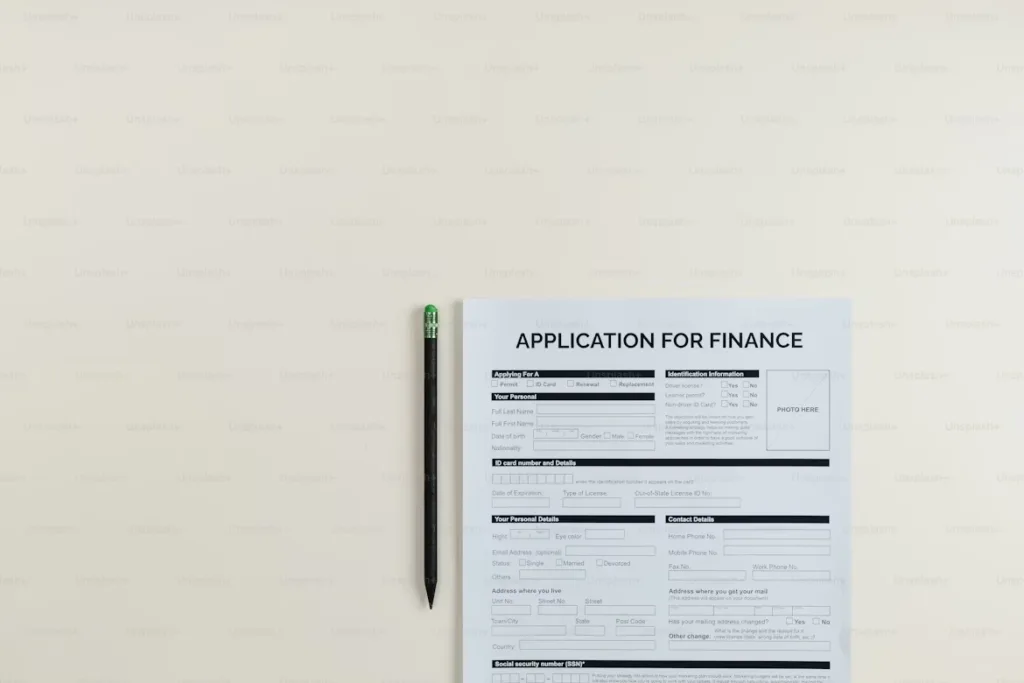
Loan Application Form
A loan application form is required by all lenders, and although it may appear straightforward. The information you enter here has a significant impact on how your request is assessed. What you need, why you need it, and whether your company can afford the repayments are all outlined in this form.
Whether the loan is for expansion, equipment, inventory, renovation, or extra working capital, you will be required to declare the purpose of the loan. This is how lenders determine whether the loan is in line with your company’s objectives and whether it makes financial sense.
You will also specify how much you would like to borrow. This aids the lender in determining whether the amount is appropriate for your company’s scale, credit history, and ability to repay debt. Approval may be delayed if you request a sum that is excessive for your cash flow.
Lastly, your estimated monthly repayment capacity will be examined by lenders. They will verify that this is a realistic estimate by comparing your declared capacity with your financial records. An accurate estimate demonstrates that you have considered the obligations associated with taking out a loan.
Carefully completing this form establishes the tone for the remainder of your application. It guarantees that the remaining documentation supports a coherent, clear financial narrative and aids lenders in understanding your needs up front.

Business Loan Requirements by Lender Type
If you want to explore which type of business loan fits your situation best, here is a link to Zenith Capital’s Business Loan Options.
Bank Loan Requirements
You should anticipate the most comprehensive and in-depth assessment when you apply for a business loan from a bank. Because they provide some of the lowest interest rates available, banks adhere to stringent regulations. They demand more thorough documentation, stricter adherence, and a drawn-out approval process. Bank loans can offer your company the best long-term financing value if you are ready for the paperwork.
The complete master checklist of documents: business permits, identification, financial statements, operational proof, and a completed loan application form, is usually required by banks. They can confirm your company’s identity, structure, and consistency throughout your documentation with the aid of these fundamentals.
Collateral documentation is also required, particularly for secured loans. Deeds of sale, land titles, and other ownership-proving documents are typically examples of this. Because collateral is their safety net, it guarantees them that they can recover value if the loan cannot be repaid, banks carefully examine it.
Audited financial statements are another important prerequisite, especially for larger SMEs and corporations. In order to guarantee accuracy and transparency, banks require officially reviewed financial statements prepared by certified accountants. They can evaluate your long-term financial health, profitability, and revenue stability with the aid of these reports.
Additionally, be prepared for credit background checks. Banks assess your personal credit status in addition to your business credit history, particularly for sole proprietorships and smaller businesses. Reliability and financial responsibility are indicated by a spotless credit record.
Banks frequently request personal guarantees, which require you and other significant stakeholders to personally pledge repayment if the company is unable to do so. This strengthens your accountability and gives the bank an additional degree of assurance.
Compared to government programs and private lenders, banks typically have a longer verification and approval timeline due to their stringent standards. They thoroughly assess risk, double-check each document, and frequently carry out follow-up interviews or site visits.
The compromise? If you can meet the requirements, banks are the best option because they provide better loan terms and lower interest rates. You have a significant advantage if you prepare accurate and comprehensive documentation because their stringent compliance process guarantees that only stable and well-documented businesses are approved.
Government Loan Requirements
The goal of government-backed loan programs, such as those provided by DTI, SB Corp, and government banks, is to assist MSMEs, particularly those seeking to rebound, grow, or penetrate new markets. The requirements place more emphasis on eligibility, compliance, and capacity-building than collateral because these loans are intended to support small businesses.
The majority of programs require eligibility certifications, which attest to your company’s membership in the targeted category, such as micro, small, or medium-sized businesses or companies in particular industries.
Additionally, some programs require mentorship or business training. You might be required by agencies to participate in program-specific seminars, financial literacy workshops, or basic entrepreneurship training. This is not a burden; rather, it is designed to improve your business management and boost your success rate following funding.
Government programs may request financial projections or bookkeeping records, whereas banks concentrate on audited financial statements. These assist them in determining whether the loan will actually support your operations and the potential for growth of your company. Here, straightforward, truthful records frequently go a long way.
Generally speaking, government loans have lower interest rates and occasionally even grace periods or repayment assistance. They typically have more stringent compliance checks and longer processing times as a trade-off. These programs must carefully verify documents and guarantee transparency because they run on taxpayer funds and are subject to government oversight.
Private Financing Company Requirements (Zenith Model)
For SMEs that require quicker approval and fewer obstacles, private financing firms like Zenith and similar lenders provide a more adaptable and efficient choice. They have less complicated requirements and place more emphasis on actual business performance than on formal collateral or extensive documentation.
In order to confirm that you are conducting business lawfully, they will still require your basic business registration and permits. For verification purposes, they will also need the business owner’s or authorised signatories’ valid identification.
Your recent bank statements, which typically covering the previous three to six months, are one of their main evaluation tools. These statements display your company’s revenue trends, cash flow stability, and level of activity. They provide more information than any official financial statement.
Private lenders also seek evidence of your business’s operations, such as supplier documents, invoices, receipts, and business photos. This enables them to verify that your company is operating steadily and that your income is real.
The greatest benefit? Collateral is not required. Private lenders are more interested in the real performance of your company than in your assets or land titles. They are an excellent choice for small businesses without collateral to pledge because they place a high value on revenue consistency and overall business viability.
Additionally, you can anticipate quicker processing times, sometimes as fast as three to five days. Private lenders provide speed and flexibility with fewer documents and faster verification, making them ideal for business owners in urgent need of funding.
If you are interested in learning more about corporate, business, or financing loans in the Philippines, you might also want to explore ZenPlus Corporate Fund by Zenith Capital.
Eligibility Factors That Affect Approval
When lenders look at your application, they are basically asking one thing: “Can this business realistically pay us back without drama?” Every factor below feeds into that judgment call.
Business Operating History
Lenders prefer businesses that have been running long enough to prove they are stable.
- The longer the track record, the more confidence they have.
- New businesses are not automatically rejected, but expect tighter scrutiny.
Monthly Sales or Deposit Volume
Think of this as the heartbeat of your operations.
- Strong, predictable cash flow boosts your chances.
- Sudden drops or erratic income can raise red flags.
Consistency of Bank Deposits
Even if sales look good, lenders want to see those numbers landing in your bank account regularly.
- Consistent deposits = strong financial discipline.
- Big gaps or irregular deposits may signal instability.
Personal and Business Credit Records
Your credit reputation still matters, yes, even in business lending.
- Late payments, unsettled obligations, or maxed-out credit lines can drag down your approval odds.
- Clean credit history? Lenders see that as proof that you handle commitments responsibly.
Industry Risk Profile
Some industries are seen as stable and predictable; others are labeled volatile.
- Food service, retail, transportation, and construction all have different risk scores.
- Higher perceived risk often means stricter requirements or higher interest.
Common Loan Approval Ranges by Business Segment
To give borrowers a realistic sense of where they stand:
Micro SMEs
Usually, smaller ops earn a modest but steady income.
- Can often qualify for microloans or working capital loans.
- Approval tends to hinge heavily on cash flow and deposit consistency.
Growing SMEs
Businesses with stronger monthly sales and some operational history behind them.
- Wider access to larger loan amounts.
- May start qualifying for bank loans if documents and financials are solid.
Scaling Businesses
These are the ones expanding branches, adding equipment, or entering new markets.
- Strongest approval chances across lender types.
- Can secure higher limits, better rates, and longer repayment terms.
Step-by-Step Application Guide
Getting a business loan is not complicated when you follow the process in the right order. Think of this section as the playbook that keeps borrowers from fumbling during crunch time.
1. Gather Documents From the Master Checklist
2. Determine the Appropriate Borrowing Range
3. Choose the Lender Type Based on Urgency and Documentation Readiness
4. Complete and Submit Application Forms
5. Participate in Verification Processes
6. Monitor Approval and Release Timelines
7. Review Loan Terms Before Accepting Funding
Important Reminders
- Be transparent at every stage; lenders cross-check everything anyway.
- Respond quickly during verification; delays from the borrower’s side can stall the entire approval process.
Tips to Fast-Track Loan Approval
Speeding up loan approval is not magic; it is discipline and good habits. Lenders reward businesses that look organised, transparent, and financially responsible. Here is how borrowers can put themselves at the front of the line:
1. Keep Updated Business Permits at All Times
2. Route Daily Sales Through Business Bank Accounts
3. Maintain Clean Credit Histories
4. Apply for Appropriate Loan Sizes
5. Prepare Documents Before Submitting Applications
6. Work With Lenders That Provide Clear Guidance
Some financial institutions leave borrowers guessing. Others walk them through the process, explain requirements, and update them promptly. Choosing a lender with a transparent process naturally speeds up approval.
Why SMEs Choose Private Lenders Like Zenith Capital
For many SMEs, private lenders provide a smarter, faster, and more flexible alternative to traditional bank loans. Here is why business owners turn to lenders like Zenith Capital:
No Collateral Requirement
Unlike banks that often require land titles or other assets, private lenders focus on business performance. You can access funding without risking your property or personal assets.
Simplified Paperwork Process
Private lenders streamline documentation. No need for audited financial statements or extensive legal files. The paperwork is straightforward, practical, and easy to prepare.
Quick Evaluation and Approval
Time is money, especially for SMEs. Private lenders like Zenith Capital offer fast review processes, sometimes approving loans in as little as two business days. Prompt decisions mean you can act on opportunities without unnecessary delays.
Funds Suitable for Inventory, Expansion, Hiring, and Equipment Upgrades
Whether you are restocking inventory, opening a new branch, hiring staff, or upgrading equipment, these loans provide flexibility to cover real business needs efficiently.
Zenith Capital’s Ka-Azenso SME Quick Loan
Zenith Capital positions itself as a practical partner for SME loans in the Philippines with its Ka-Azenso SME Quick Loan.
Key features include:
- Loan amounts ranging from ₱100,000 to ₱1,000,000
- Approval is as fast as two business days
- A checklist directly aligned with this very guide, so you can prepare documents efficiently and confidently
For small business owners who value speed, simplicity, and support, private lenders like Zenith Capital provide a clear advantage over traditional funding options.
It is Time for Zenith Capital
Understanding business loan requirements in the Philippines is the first step toward a smooth and successful application. Knowing exactly what documents lenders expect, how they assess risk, and what each lender values most can save you time, reduce stress, and increase your approval chances.
Equally important is choosing the right lender. Whether your business is ready with complete documentation or needs funding quickly, selecting a lender that matches your urgency and preparedness makes a significant difference in how quickly you can access capital.
If you are ready to take the next step, consider applying for a Ka-Azenso SME Quick Loan with Zenith Capital. Enjoy fast, transparent financing from ₱100,000 to ₱1,000,000 with no collateral required. With a streamlined checklist aligned with this guide, your business can secure the capital it needs quickly, safely, and efficiently.